There are many reasons why ‘The Racing Capital Of The World’ is such a fitting nickname for Indianapolis Motor Speedway. As the home of the Indianapolis 500, the venue has bore witness to generations of racing legends and has welcomed some of greatest drivers in history, all of whom have put everything on the line for an opportunity to win at one of the most prestigious and coveted stages in the world. Yet, amid the storied traditions of the Brickyard, the Indianapolis 8 Hour has steadily carved out its own identity.
As the final round of both the GT World Challenge America powered by AWS and the Intercontinental GT Challenge championships, the Indianapolis 8 Hour brought together international manufacturers, world class sports car teams, emerging talents and household names from across the racing industry.
In a way, the event represented a blending of worlds. On one side is the global GT3 landscape, with international recognition at stake for drivers, teams, and manufacturers alike. And then on the other is Indianapolis Motor Speedway itself, a track whose legacy stretches back over a century and whose place in American racing culture is deeply rooted and virtually unparalleled.
When brought together, it created a highly distinctive event that celebrated the international reach of modern sports car racing while embracing the traditions, personalities and spectacle that make Indianapolis so beloved and special.
When the Indianapolis 8 Hour made its debut in 2020, it introduced a new international challenge to a venue that already had its fair share of defining moments in history. However, this time it would be expanding the Brickyard’s reach in a very different way, connecting Indianapolis to a broader championship spanning some of the world's most renowned circuits.
Its arrival also reflected the evolution of Indianapolis Motor Speedway itself. While the venue remains inseparable from open-wheel racing and the Indianapolis 500, its history has always encompassed a wider variety of motorsport machinery. The Indy 8 Hour added another dimension to that, bringing the international GT racing community together for an opportunity to compete on an iconic American stage.
Winners Who Wrote their Names in the History Books
Every great event builds and strengthens its identity through those who conquer it, and the Indianapolis 8 Hour has been no exception.
The 8 hour event was previously set in California, and 2020 marked its first year in the Midwest at IMS. It went on to set the tone for what would become a definitive international showcase of world class GT3 competition. From there, each edition added another chapter to the event's developing history, with more and more interest from competitors to put their names on the Brickyard's honor roll.
That is part of what made the Indy 8 Hour compelling. The winners become part of the venue's ongoing story, joining a lineage of drivers who have made their mark at one of the most recognizable addresses in motorsport.
Over the years, the Indianapolis 8 Hour has established itself as a race capable of producing very different kinds of victories, from dominant performances to strategic triumphs and championship-defining finishes.
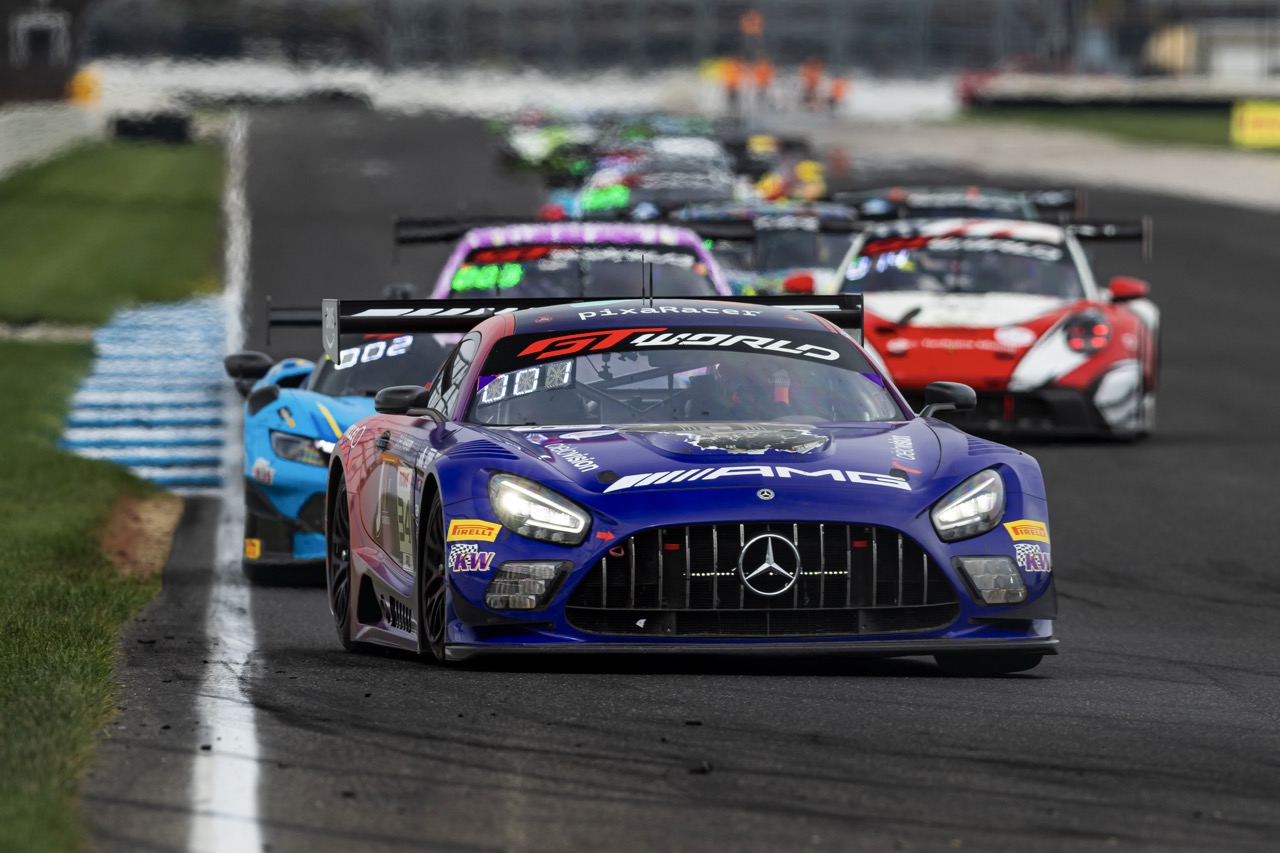
The opening three editions established the race's international credentials. BMW took the inaugural overall victory with Walkenhorst Motorsport and drivers Augusto Farfus, Nicky Catsburg, and Connor De Phillippi. Audi followed with Saintéloc Racing in 2021 with Christopher Haase, Patric Niederhauser, and Markus Winkelhock, while Mercedes-AMG claimed the honors in 2022 through Craft-Bamboo Racing with a lineup of Dani Juncadella, Raffaele Marciello, and Daniel Morad.
Team WRT subsequently made Indianapolis its own. The Belgian operation won three consecutive editions from 2023 through 2025, each time with a BMW, demonstrating the depth of its driver roster and its ability to execute year after year.
Philipp Eng, Sheldon van der Linde, and Dries Vanthoor set the benchmark in 2023, with van der Linde and Vanthoor returning to the operation in 2024 to do the same, this time alongside Charles Weerts. Meanwhile, the 2025 victory brought together Kelvin van der Linde, Charles Weerts and MotoGP legend Valentino Rossi, an especially compelling combination of international GT expertise and crossover sporting stardom.
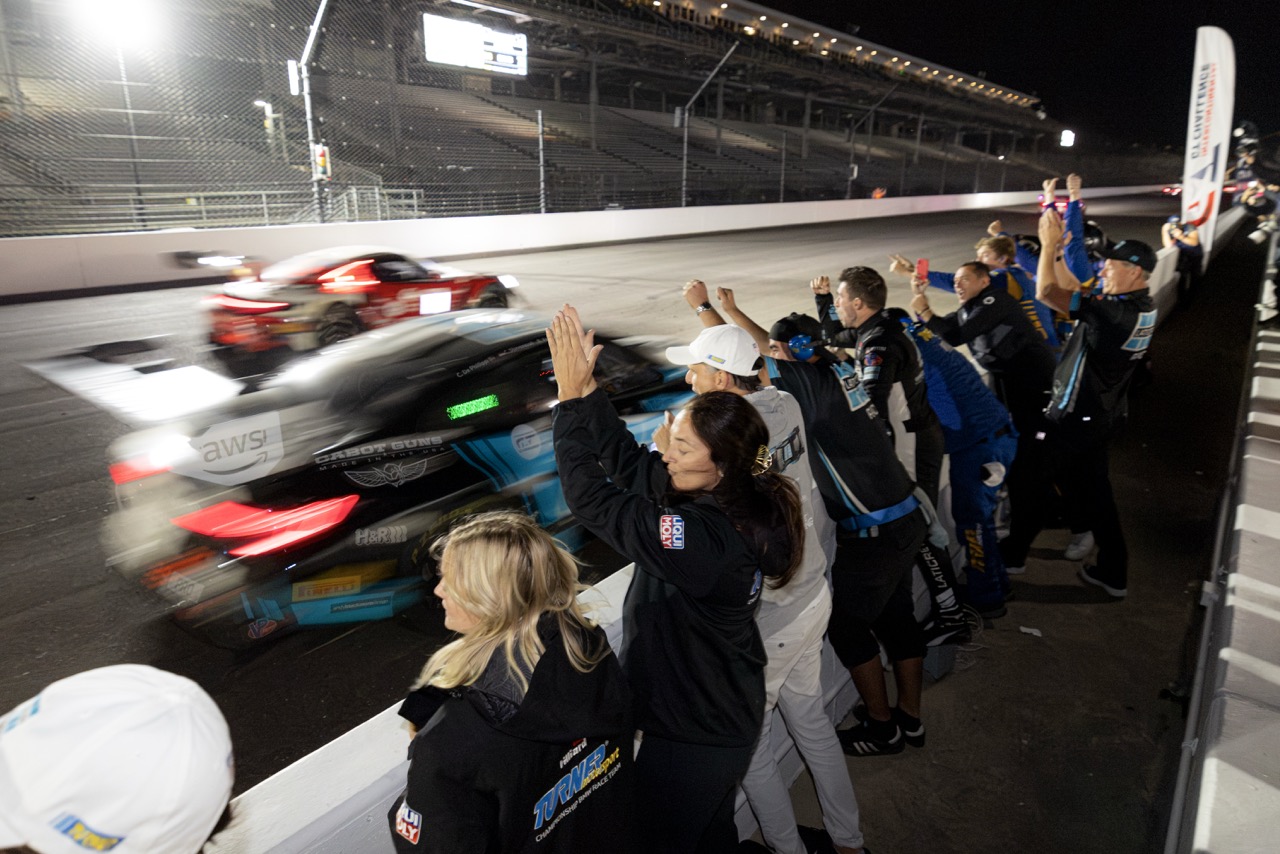
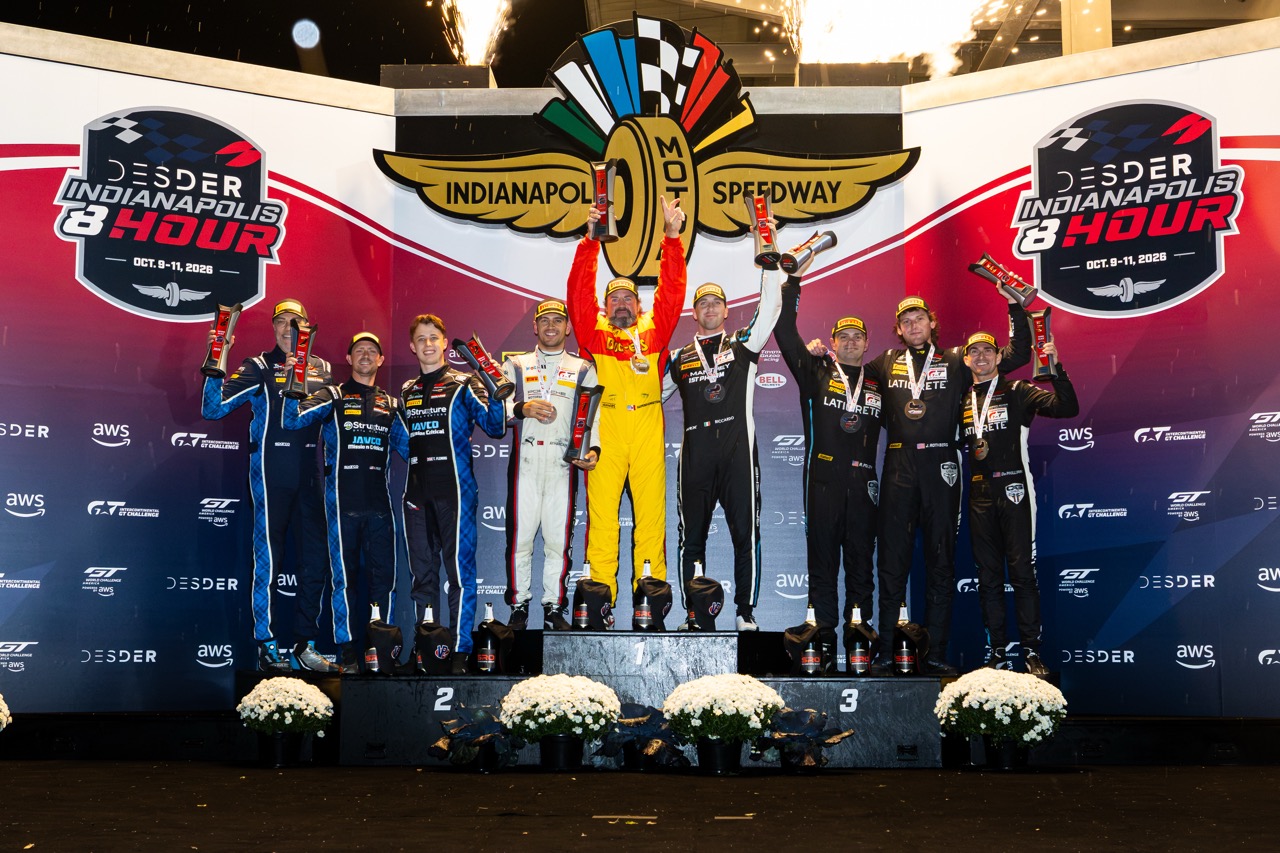
Then came 2026, when GMG Racing put a stop to BMW’s reign. Kyle Washington, Ayhancan Güven, and Riccardo Pera won in the No. 32 Porsche 911 GT3 R EVO, giving both an American Pro-Am team and Porsche their first overall victories in the event. The triumph was also a reminder that the Indy 8 Hour is not simply a contest between established factory-backed operations, instead its format leaves room for independent teams to challenge the established order.
There’s Nothing Like Indianapolis Motor Speedway
Indianapolis Motor Speedway opened in 1909, beginning a history that would help shape the development of automobile racing. Its famous 2.5-mile oval became the home of the Indianapolis 500 in 1911, and the Brickyard subsequently developed into one of the most recognizable venues in global sport.
The Speedway's identity is built on more than its size or longevity. It is a place where sporting traditions become part of the landscape. From the yard of bricks at the start-finish line, the roar of engines echoing across the massive grandstands, the Pagoda towering over the track and serving as a beacon of aspiration, all of the sights and sounds contribute to IMS feeling more like a living, breathing character rather than just a setting where racing takes place.
But Indianapolis Motor Speedway's international significance extends well beyond the Indy 500. The venue has also hosted Formula 1's United States Grand Prix, most notably during the championship's return to Indianapolis from 2000 through 2007. Those years brought the world championship to the Brickyard and placed Indianapolis at the center of the international motorsport conversation.
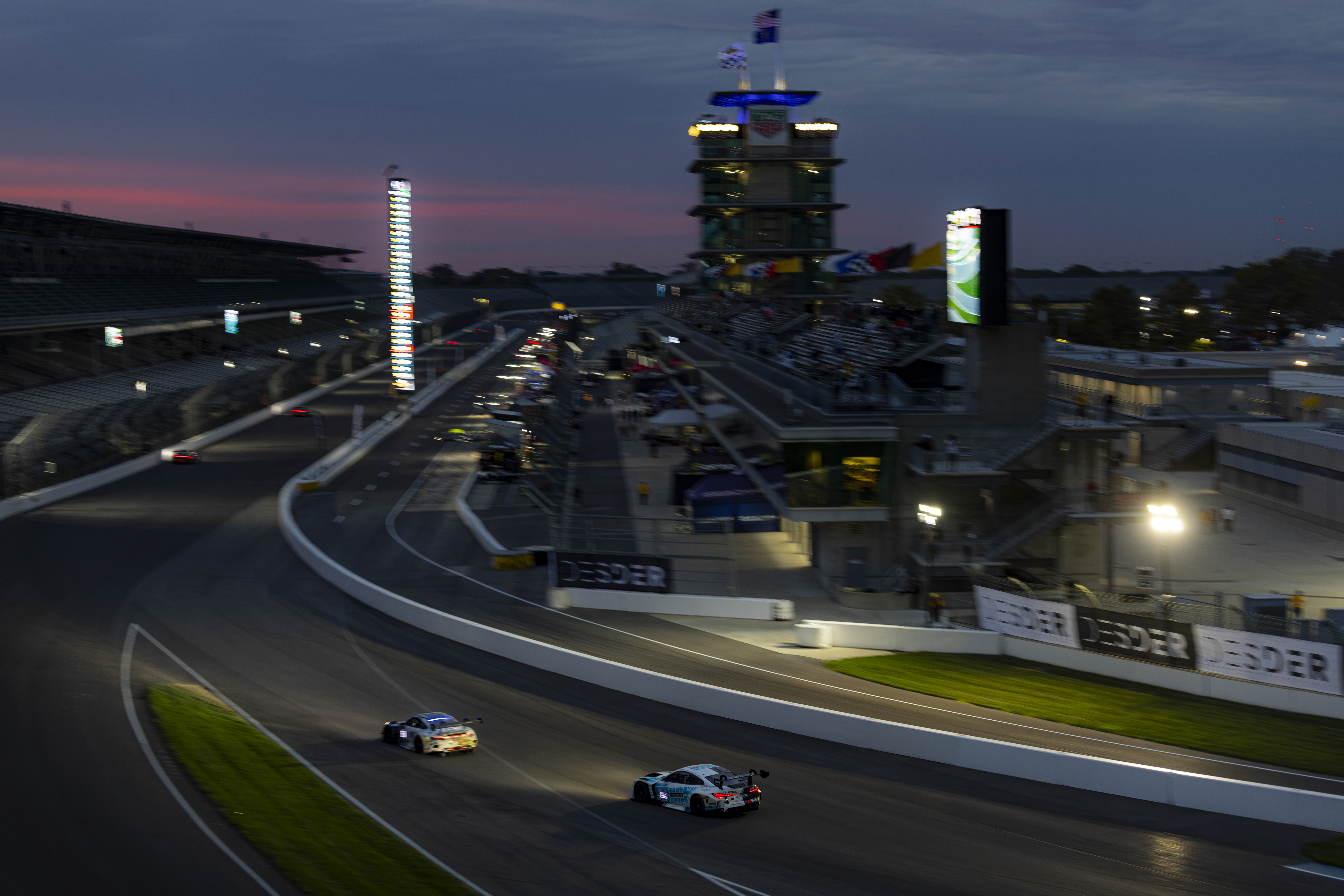
For GT racing, the road course provides a different way to experience the venue. The combination of technical sections, heavy braking zones and the long front straight creates a challenge distinct from the high-speed oval. Cars must be responsive through the infield while retaining the stability and efficiency needed to make the most of the circuit's faster sections. Over the course of eight hours, those demands are magnified.
There is an important symbolic dimension, too. Competing at Indianapolis places the Indy 8 Hour within a legacy built by generations featuring the best and brightest the sport has to offer.
The Indy 8 Hour does not need to imitate the Indianapolis 500 to belong at the Brickyard. Its appeal lies in offering something different while drawing strength from what came before it.
The IndyCar Connection
The Indy 8 Hour has introduced a fascinating crossover by welcoming several drivers from the NTT INDYCAR SERIES into the world of GT racing.
It makes total sense. IndyCar drivers spend more time than anyone at the Speedway. Between everything that encompasses the Month of May and all of the hours testing both on-track and in the simulator, nobody knows IMS like they do. However, in GT racing, all that knowledge and experience is being applied in a new setting, forcing them to approach their skillset differently. Not to mention that any opportunity to kiss the bricks is far too enticing to pass up.
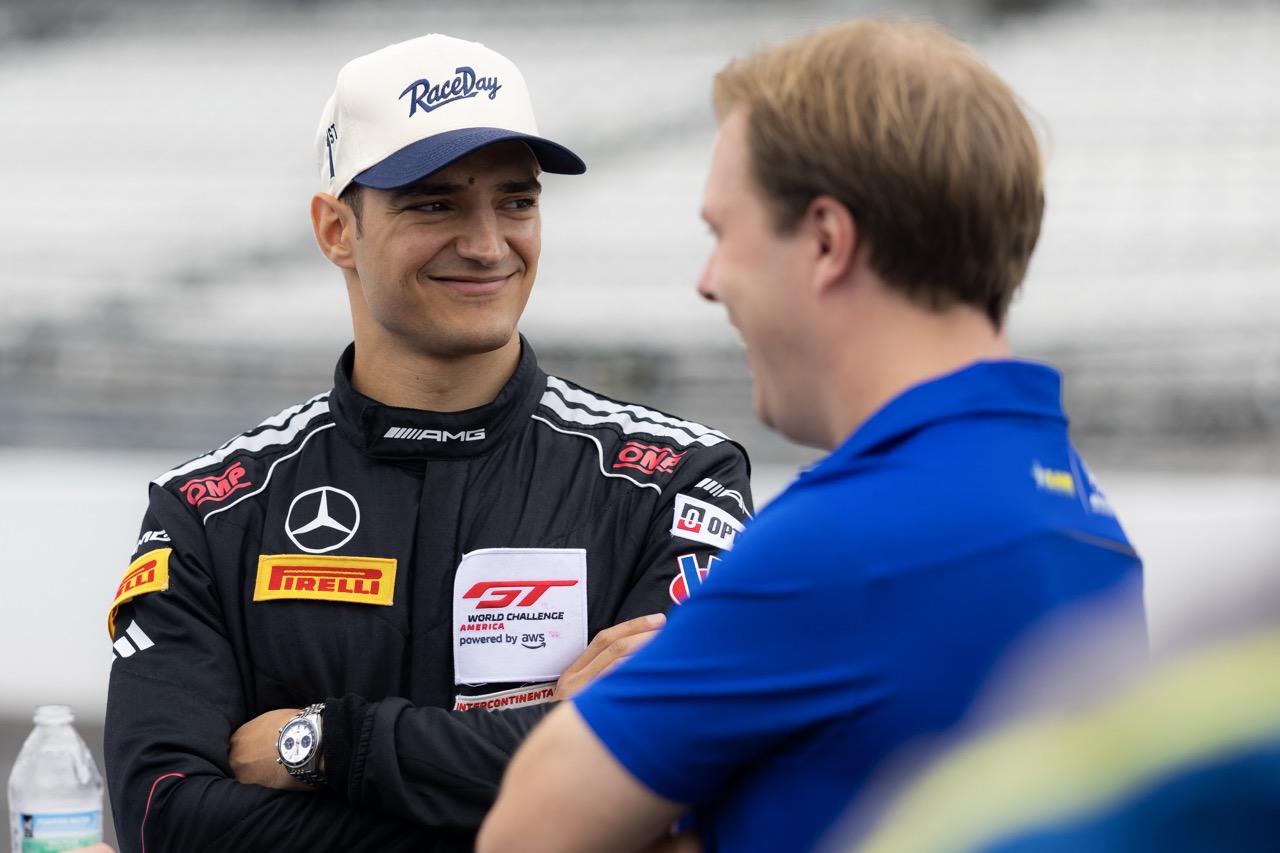
Few drivers embody the modern IndyCar era more clearly than Alex Palou. A five-time NTT INDYCAR SERIES champion and the 2025 Indianapolis 500 winner, Palou has demonstrated an ability to excel across a variety of racing environments, and is already regarded as one of the greatest to ever do it.
He made his Indianapolis 8 Hour debut in 2024 with Lone Star Racing, sharing a Mercedes-AMG GT3 with Fabian Schiller and Luca Stolz. Electrical problems affected his teammates' stints, and the car finished 13th. Palou returned in 2026, once again joining Lone Star Racing, but an early on-track incident saw the team’s race come to an end before Palou even got the chance to get behind the wheel. Still, despite the misfortunes, he reaffirmed his desire to return to GT racing and give it another go.
In 2025, two-time IndyCar champion and 2018 Indianapolis 500 winner Will Power made his sports car racing debut at the Indy 8 Hour. Power joined Kenny Habul and Chaz Mostert in the No. 75 75 Express Mercedes-AMG GT3 EVO. His experience at Indianapolis was extensive, including five IndyCar victories on the Speedway's road course, but the 8 Hour presented an entirely new test.
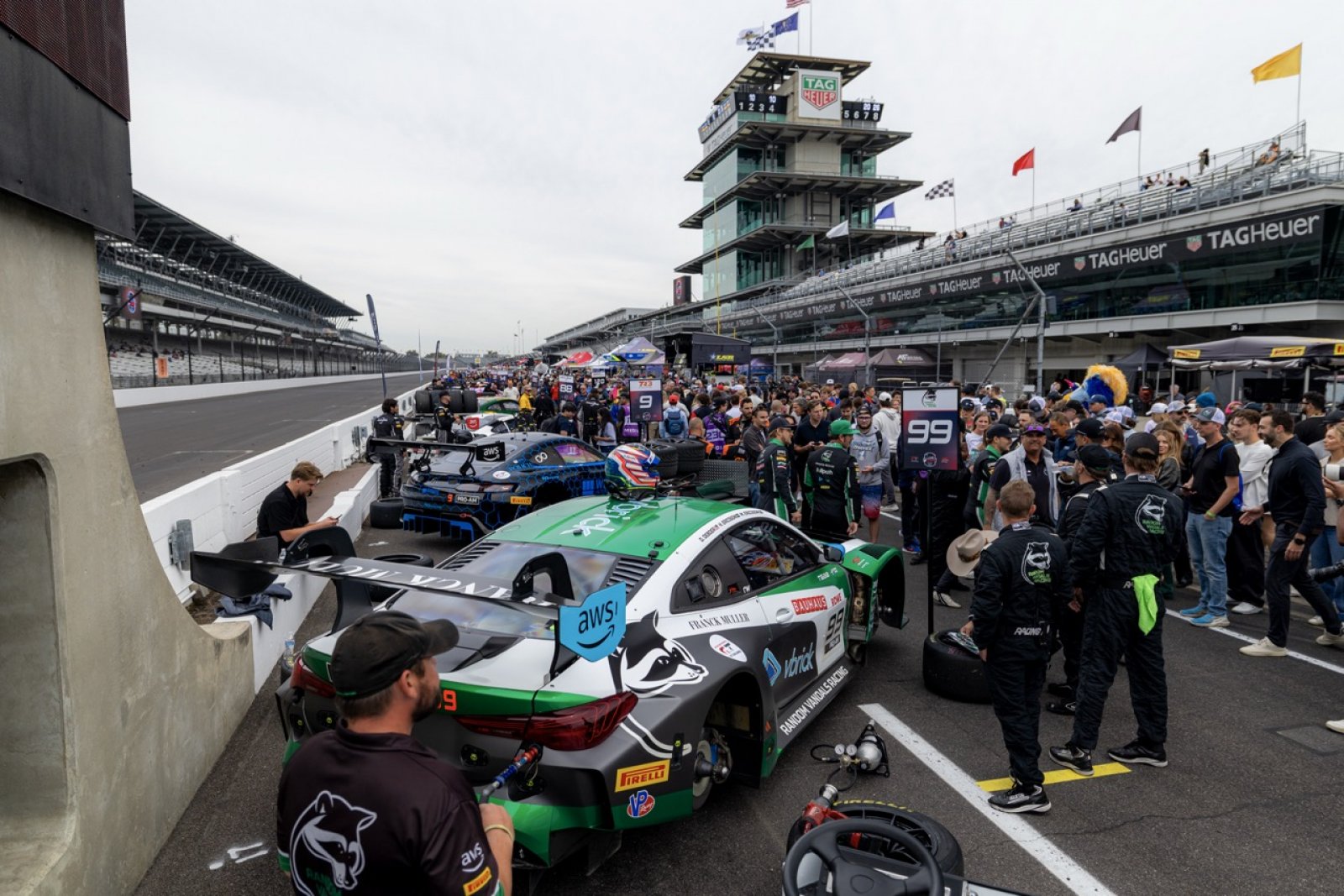
For Marcus Ericsson, his connection to the Brickyard was also already secured in its history books. The Swedish driver won the Indianapolis 500 in 2022, and in 2026 he returned to the venue to compete in the Indy 8 Hour alongside his younger brother, Hampus Ericsson, and Derek DeBoer in the No. 99 Random Vandals Racing BMW M4 GT3 EVO. While he has already achieved the motorsport's most coveted American victory, this was a chance to compete alongside his brother, bringing in a personal dimension to an already incredibly special place.
Conor Daly has also become a familiar face at the Indy 8 Hour. The Indiana native brings a natural connection to the event, having competed in the race with Random Vandals Racing in 2025, and being an obvious hometown favorite.
That kind of crossover, which has become increasingly common over the seasons, enriches the weekend for everyone involved. It gives fans new stories to follow and reinforces the idea that Indianapolis remains a meeting point for different disciplines, generations and racing cultures.
Where Virtual Meets Physical
Racing as a whole, and the SRO Motorsports Group, has always been profoundly shaped by innovation, and the Indianapolis 8 Hour has provided a platform for a more contemporary expression of that desire for expansion and improvement: esports.
In 2022, SRO Esports staged the first-ever ROG Invitational at Indianapolis Motor Speedway in conjunction with the Indy 8 Hour weekend. The event featured two live races on Assetto Corsa Competizione, bringing together professional sim racers and real-world competitors in an on-site competition.
The initiative demonstrated how esports can complement a traditional race weekend and add value to it. Sim racing allows fans to experience a version of the same competitive environment, while professional drivers can engage with a discipline that demands its own technical understanding, precision and racecraft.
At a venue so closely associated with technological progress, the connection feels appropriate. Indianapolis was conceived in part as a place to test and demonstrate the potential of the automobile. More than a century later, its events continue to reflect how racing evolves alongside the technologies surrounding it.
The esports initiative also speaks to the changing demographics of motorsport. Digital competition has opened new pathways for fans to engage with racing, and sim racing has become a meaningful part of the wider competitive ecosystem, serving as a more accessible avenue for aspiring professional racers.
Embracing the Racing Community
The story of the Indianapolis 8 Hour extends beyond the venue’s gates. Over the years, community outreach has become one of its centerpieces, with event activations predicated on bringing fans as close as possible to the professional paddock and all that goes on within it.
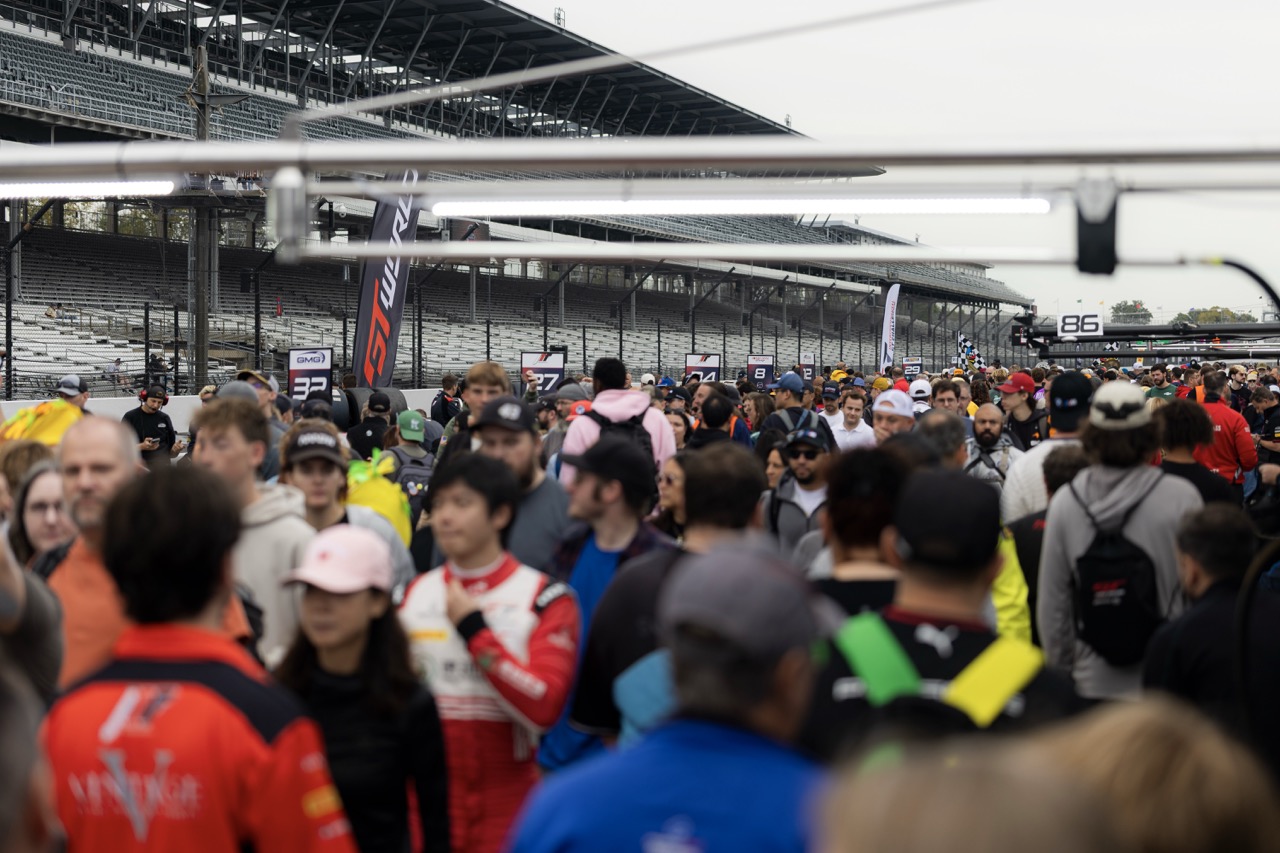
SRO prides itself on offering an open-paddock atmosphere, with general admission tickets giving fans the opportunity to walk the paddock and see all the cars and stars up close for themselves.
With so many international teams adding to the grid, there’s no shortage of behind-the-scenes action as both the track and the garages stay busy all day long. It provides unparalleled views into the logistics and operations that take place day and night, but rarely gets shown in on-screen coverage.
This openness also comes with encouraging future generations to immerse themselves in the sport, no matter their experience level. Groups of all ages and backgrounds have been brought to Indianapolis Motor Speedway, with hundreds of local kids being invited by SRO America and the venue over the past six years to take in all the sights and sounds, ask questions, and discover the realm of possibilities for a career in motorsports.
Furthermore, early editions of the Indy 8 Hour also ushered in a sports car parade through downtown Speedway that brought teams and their machines into the streets surrounding the circuit, offering a personal connection within the city itself.
Next Chapter
The 2026 edition of the Indy 8 Hour was the end of an era. After serving as the host venue since 2020, the 8 Hour round is relocating to a new home in the heart of Texas next year. However, Indianapolis remains on the calendar as the season finale, instead moving to a regular length three-hour format.
The Indy 8 Hour winners have included leading manufacturers and some of the world's most accomplished sports car drivers. Its entry lists have featured IndyCar champions, Indianapolis 500 winners and competitors from a wide variety of racing backgrounds. Its place on the Intercontinental GT Challenge calendar connected the Brickyard to an international network, while its community brought the spectacle beyond the paddock.
It’s a perfect demonstration of what makes Indianapolis Motor Speedway so enduring.