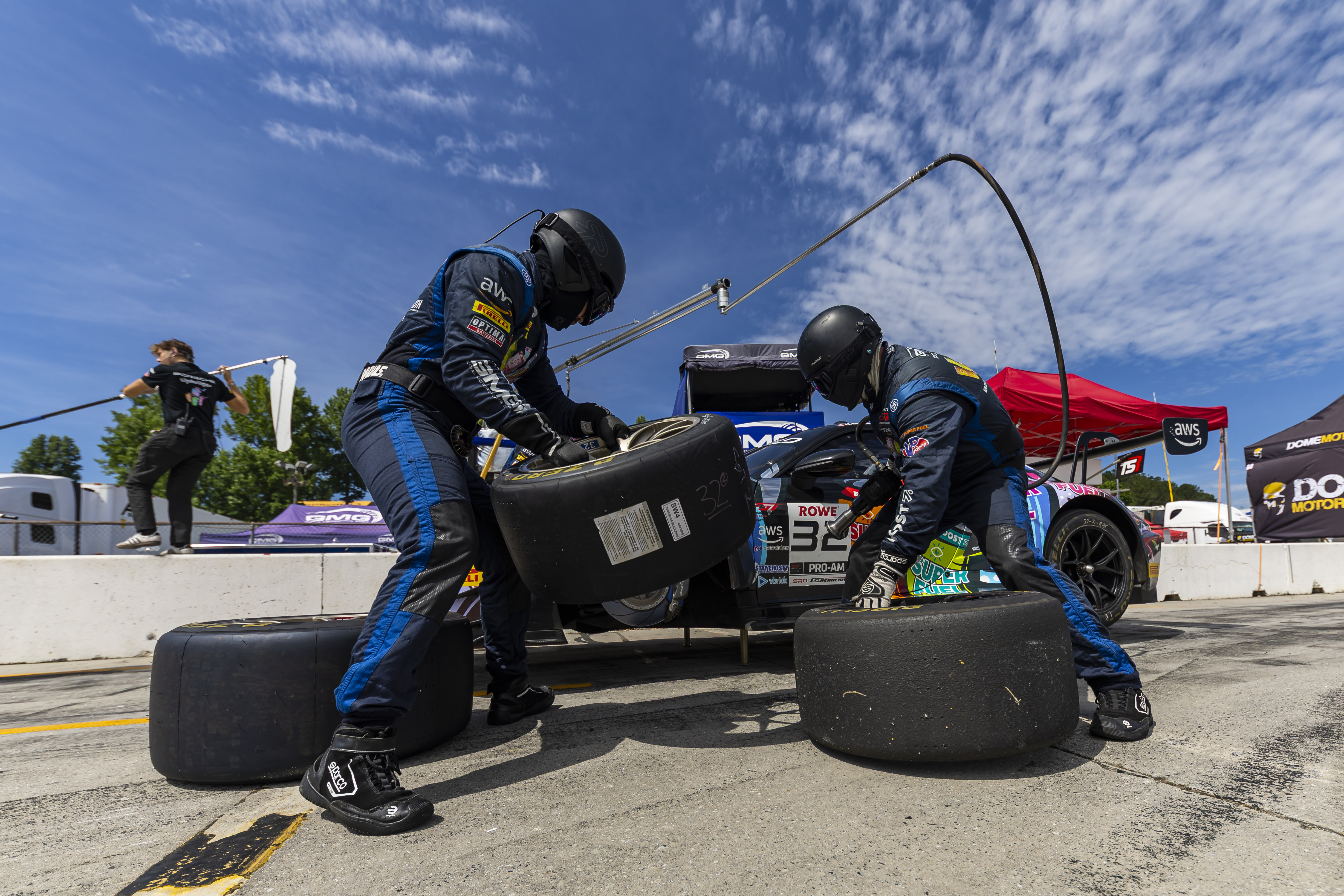
While they are not always considered to be a showstopping element, tires have an incredible impact on a car’s performance level, making them one of the most important components in motorsports.
Across SRO America competition, teams compete exclusively on tires supplied by Pirelli, the Official Tire Partner of SRO America.
GT racing utilizes a single-spec tire supplier as this approach helps ensure competitive parity across the field, as well as control costs for teams. When everyone is using the same tires, the focus remains on drivers, teams, and manufacturers. Every team receives the same tire specifications, creating a level playing field throughout the championships.
GT3 tires may resemble high-performance road car tires at first glance, but they are purpose-built racing products designed to handle the demands of professional competition.
They must withstand high cornering loads, heavy braking forces, long distances, varying track temperatures, and multiple drivers with different driving styles. A tire must provide grip, consistency, and durability, and ideally all at the same time.
In dry conditions, GT cars run on slick tires. Unlike road tires, slicks have a smooth tread surface with no grooves. This maximizes the amount of rubber in contact with the track, delivering the highest possible levels of grip and performance, thus resulting in faster lap times and greater cornering speeds.
When rain arrives, teams switch to specially designed wet-weather tires. These tires feature grooves that help channel water away from the contact patch, reducing the risk of hydroplaning and helping drivers maintain control in challenging conditions. Choosing the right moment to switch between slicks and wets can be one of the biggest strategic decisions of a race.
Tires don't just affect speed, they also influence race strategy. Teams are constantly monitoring tire wear, track temperatures, weather forecasts, and driver feedback to try to make the best calls during pit stops. Teams are also tasked with having to decide whether changing tires is worth the time spent in pit lane or if maintaining track position is the better option.
So the next time you're watching a race, keep an eye on the tire strategy. It may not always be the most obvious or talked about element, but it's often one of the biggest factors influencing the outcome.
Have a question about tire strategy, wet-weather racing, or how teams manage tire wear over a race? Submit it through the Chat GT3 Typeform and we may answer it in a future article.