
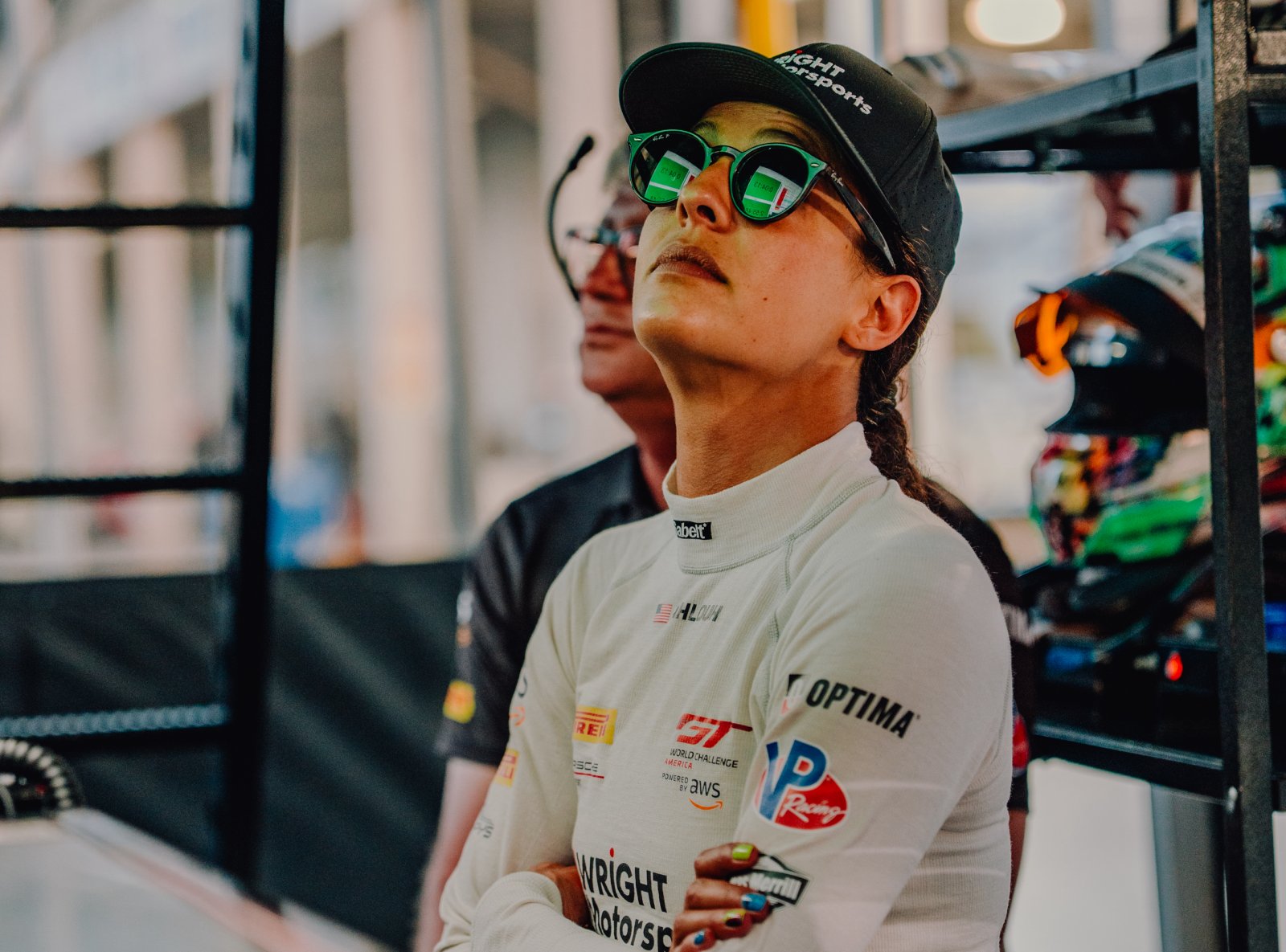
I came into Sebring riding the emotional high of our podium at COTA feeling optimistic, motivated, and dangerously close to developing self-esteem.
Sebring saw that and kicked my door down.
For anyone unfamiliar, Sebring is what happens when someone turns an old airfield into a motorsport- themed chiropractic experiment. The surface is held together by history, vibes, and probably unresolved legal disputes. Driving it is like being trapped in a steam oven inside a concrete mixer strapped to a rocket. The bumps are punishing, the heat feels medically concerning, and by the end of a stint you’re basically a sentient electrolyte packet.
And I love it.
Three years ago, I came here as a fan carrying a backpack, sunscreen, and zero understanding of what GT3 racing entailed. This year I was wrestling a Porsche 911 GT3 R around Sunset Bend with 21 other high-functioning sociopaths.
Life comes at you fast.
From “We Have Pace” to “Oh No, Expectations”
The weekend was an absolute blitz. It was compressed into two days with barely enough time to breathe. The Wright Motorsports Porsche rolled off the truck strong, and for the first time this season I felt genuinely comfortable in the GT3 car early in the weekend. But the second I realize I might be competitive, my internal monologue becomes:
“What if that was your one good lap?”
“What if everyone discovers you’re just aggressively enthusiastic?” “What if the Porsche senses fear and launches you into Alligator Alley?”
Super stable mindset. Totally pro athlete behavior.
Surprisingly, qualifying went fairly well. I put the car seventh in class before the session got red flagged, and honestly I was pretty happy with it. It was my fastest first lap of the weekend, and I wasn’t quite sure what to do with my newfound positivity.
Thomas and I lined up ninth in class for the race. Not ideal. Not terrible. Solidly in the “cause problems from here” category.
Lap Two: The Racing Gods Demand Entertainment
The opening laps were chaotic in the way GT World Challenge starts always are: cars everywhere, dirt flying, everyone pretending they’re calm while committing mild acts of violence into Turn 1.
I had a great start and was on the attack. And then I spun at Sunset Bend on lap two.
Normally when drivers spin, we do the standard racing-driver thing where we say: “Yeah, just pushed a little too hard there.” Internally, we’re experiencing all five stages of grief at once.
This time? I was a little proud of it. Not because spinning is ideal racecraft. It is not. Zero stars. Do not recommend. But because for the first time in GT3, I felt like I had reached the limit instead of driving underneath it.
At Sonoma, I was trying to survive. At COTA, I was learning to trust the car. At Sebring, I finally pushed hard enough to find where the limit lives. Turns out the limit lives at Sunset Bend. Good to know.
One second I’m carrying more speed and thinking “I’m gonna getcha!” The next I’m backwards wondering if I can simply retire from public life.
By the time I got going again, we were dead last. Mentally, I struggled after that. Suddenly every bump felt suspicious and every slide felt like the start of another mistake. I wanted to keep pushing, but I didn’t fully trust the car (or myself) for a while afterward.
The Recovery Drive
That’s where Craig Stanton and Thomas Merrill saved me.
Craig, my spotter, was incredibly positive on the radio the entire stint. Just steady reminders to reset, focus forward, and trust the car. Thomas helped me approach the rest of the stint as a learning opportunity instead of a disaster. “Push the tire. Assess the car. Use the TC. You found the limit. Now use it.”
Annoyingly reasonable advice.
Once I stopped trying to avoid mistakes and started focusing on the tire, the pace slowly came back. I started understanding what the rear tire was doing over a full fuel run, how much slip angle it would tolerate over the bumps, and where I could lean on it again without overcorrecting every tiny movement.
I got into the low 2:06s. Then 2:05s. Then finally into the 2:04s. At one point I was gaining nearly a second a lap on the cars ahead.
But Sebring—normally known for chaos, cautions, and random disasters—suddenly became the cleanest endurance race in human history. No yellows. No strategy shakeups. No free positions.
Just three straight hours of suffering and accountability. Rude.
By the end of my stint, I had clawed back a huge amount of ground and handed the car to Thomas feeling somewhere between relieved and apologetic. It didn’t feel like a heroic comeback. It felt like a rough lesson to learn so publicly.
A week later, I feel differently. I’m proud of my resilience and my progress.
The race wasn’t perfect. Very obviously not. But I finally feel like I’m pushing hard enough to learn where the limit is instead of circling around it like a nervous housecat.
Thomas Merrill Continues to be Disgustingly Competent
Thomas got in and immediately started dropping 2:02s like he found them in a jacket pocket earlier. On the radio, he sounded less stressed driving a GT3 car around Sebring than I sound ordering coffee. Meanwhile, I’m standing there sweating through my grownup footie pajamas, trying to recover electrolytes and my dignity.
The race finally went yellow with under an hour to go after a Mercedes produced enough smoke to alert nearby air traffic control, bringing the field back together for one final sprint.
The restart got spicy immediately. Cars fighting everywhere, people running out of patience, Porsche-on- Porsche violence. Classic family reunion behavior.
With just minutes remaining, chaos unfolded ahead of Thomas. Cars made contact and bounced through the grass, penalties started flying, and somehow we emerged from the dust cloud back up to eighth in class.
Which feels like the most Sebring way to finish a race. Sweaty, hard-earned, and emotionally confusing.
What I’m Taking with Me
Apparently, confidence is built the old-fashioned way: mild suffering, repeated emotional damage, and enough Liquid IV to reanimate a medium-sized horse.
Sebring wasn’t my cleanest weekend. It definitely wasn’t our easiest. But I think this was one of the most important weekends I’ve had so far.
At Sonoma, I learned I could survive GT3. At COTA, I learned I could fight near the front. At Sebring, I learned I’m capable of pushing hard enough to fail properly.
I know that sounds strange but racing drivers will understand exactly what I mean.
For too long I’ve feared the public shaming I was sure was coming if I made a mistake. Instead, I found there was no gauntlet of critics waiting. There were the same voices of support, reminding me how far I’ve come.
The only person shaming me was me.
Next Stop: Road Atlanta
Next up is Road Atlanta, which is fast, narrow, and terrifying. I’m already mentally preparing for Turn 12.
But I trust myself more now. I’m learning that one bad moment doesn’t define an entire weekend unless you let it. Sebring didn’t give me the result I wanted. It gave me something more useful.
Despite my best efforts, I’m starting to believe I belong here. Show up. Do the work. Face the gaps. Close them. Repeat.